

Unknown's avatar

Blame Helps No One


blame-wendy-wyatt-st-thomas-university

Shared from Wendy Wyatt, University of St. Thomas

I don’t know if you’ve noticed but one of the first questions asked after any kind of unpleasant event is “Whose fault was it?”


On one level, such questions serve a very useful purpose – they keep us from having to explore the possibility that we may have to own what went wrong. Identifying someone by name, even better, being sable to display a picture of the responsible person, offers us a sense of order, sense of justice, and, even, a sense of security.

With the release of A Nation At Risk in 1983, we identified not only the problem (poor academic achievement), but also the culprit – the American school system.

We had completed a test-drive of this thinking immediately following the Soviet launch of Sputnik in 1957. We were told that the blame rested squarely on the shoulders of our schools for not producing a sufficient number of scientists and world language teachers. No one need look deeper for other, perhaps more salient reasons. We were told who was responsible and we accepted it. We had our villain.

Now, with A Nation at Risk, we not only solidified our belief in the failure of our system but we also blindly accepted the recommended solutions. No need to look further. Our schools were too soft. We needed more rigor. We needed more time in academic subjects. We needed better schools.

Twenty years later, our schools were still not rigorous enough, our students not still accomplished enough, our test scores still not good enough. We needed better standards. We needed better assessments. We needed accountability. We needed a new scapegoat. If the schools still weren’t good enough, there must be someone to blame. Ah, but wait a minute! If our schools, even after twenty years of improving standards and tests, still weren’t good enough, who was to blame? Well, of course, it was the teachers. They were the problem. They weren’t good enough. We’ll make sure ”no child is left behind” by insuring that all teachers are “highly qualified”.

There you go. All is now right with the world. We’ve found the culprit. We don’t have to look at the data. We can ignore that kids in wealthier suburban districts were doing well and that kids in poverty were not. It’s the teachers. We can bring “better” people into the profession through programs such as Teach for America. That’ll do it. But wait, it didn’t. With very few exceptions, poor kids in largely falling down and under-resourced schools continued to reflect the problems of generational poverty and the struggles of life in the inner cities.

So let’s consider this. Perhaps it is the teachers. Perhaps it is the teachers doing precisely what we’ve trained them to do – and what we trained them to do that was geared to a level of expectation before the arrival of A Nation At Risk, before the 24/7 access to the stuff we had been charged with pouring into their heads, before the revolution of social media – before teachers were called upon to do things that they had never been trained to do and which run counter to their experiences as students themselves.

If it is the teachers, let me share that is not because of lack of caring or commitment – the kind of caring and commitment that I have seen over and ever again in the more that 50 schools and districts I have observed in the last decade. It is precisely the caring, the commitment and the devotion that prompted one young lady I interviewed to tell me, “The teachers at this school are annoying. They won’t let me fail.”

I believe that it is the teachers but, most importantly, it is the culture we’ve deliberately created in our schools. It is a culture that prizes compliance and efficiency over learning. It is a culture that focuses attention on a limited number of academic subjects, too frequently at the expense of the very things that we hope to engender in our students. It’s a culture that does this far too frequently at the expense of the time they desperately need to discover and explore their passions. It is culture that seriously shortchanges the need to help students learn how to be in a world that is becoming increasingly foreign to the adults charged with helping them find their way.

The road to moving beyond the “blame game” is one where:

  • We focus on defining what we really want for our kids under the notion of life, college and career readiness
  • We define in concrete terms what this phrase, “life, college and career ready”, means.
  • We engage our teachers in deep conversations about what they need to learn in order to successfully cause this to occur with the student they see.
  • We commit to the delivery of experiences for our teachers that allow them to be successful in this mission.
  • We define leadership positions in the context of commitment and capacity to redefine teaching and facilitate the successful development of the tens of thousands of caring and committed teachers who have been unfairly called “the problem.”

It is road on which we bring increased intentionality to the role of teacher and school leader – an intentionality defined by causing learning. It is a road where we provide for teaches the clarity of purpose, the autonomy and the opportunities for mastery that Dan Pink suggests in his work on Motivation.


It is a road that defines our schools as centers of learning – centers that design engaging learning experiences for our students and ourselves, centers that can facilitate and collate the learning of students wherever it occurs. It is road on which these places are staffed with the dedicated, caring, and supportive people that a have always defined the best of the teaching profession.

Unknown's avatar

Unlearning: The Forgotten Skill for the 21st Century

I

disaster business IMG_1132

Gary Larson

In his great little book, Unschooling Rules: 55 Ways to Unlearn What We Know About School and Rediscover Education, Clark Aldrich suggests that the purpose of education today is threefold: Help kids learn how to learn, learn how to do, and learn how to be. As I’ve mentioned previously, I think his book is worth the read and provides some fascinating rationale for these three goals. I have believed this for some time and immediately shared with my wife that someone has finally recognized the wisdom of my long-held position.

It didn’t take her long to burst my bubble by asking. “So, Mr. Thought Leader, how many schools have you straightened out with this wisdom?” My silence spoke volumes. “Fewer than I would have hoped”, I replied humbly. So, like any thought leader worth his salt, I began… well… to think.

I thought about the knowledge, skills, and dispositions that are closely identified with 21st Century Learning… creativity, problem solving, critical thinking, innovation, flexibility, adaptability, self-directions, perseverance (grit), responsibility. Who could argue with these, I thought.

I thought about the gifted school leaders I’ve met, the talented and dedicated teachers, the colleagues, the programs we’ve hosted, the PLC’s I’ve guided. On and on I thought. Why has so little changed?

The subtitle of Aldrich’s little book came back… 55 Ways to Unlearn What We Know About School…. There it was! All of the people that must be involved in the process of helping us develop the critically important and, oh so sensible, 21st Century skills have spent years learning how to learn, how to be, and sometimes even, how to do in school.

We are explaining, urging, often demanding, changes in the way we do things… and sometimes even evaluating people on their success in this transition. We do this as if the logic of the need for change is sufficient to overcome years of learning…learning how to be successful in the “old” school.   This is true for kids and for adults alike.

We get cranky with the slow adopters. We move them to the left side of “bell shaped curve” of dedicated teachers. We do this with no regard for our knowledge (gained through experience) about how hard it is to abandon things we’ve always done, especially if we’ve been positively reinforced for doing them in a certain way.

Our success in transforming the experiences for our adults and students will hinge on our ability recognize, and even honor, what people have learned. It will depend more on our encouragement and support for their unlearning of old ways than our ability to exhort them to try new things. As Danny DiVito said in the film Other Peoples Money. “ I bet the last company that made buggy whips made the best @#$&*@# buggy whips on the day they closed.”

We must learn new ways of designing learning for our students. But first we must learn how to unlearn those things that, while once valuable, now stand in our way.

What have you had to “unlearn” in order to be really successful at helping our kids acquire those College and Career Ready skills for the 21st Century?


Unknown's avatar

We Can’t Continue to Do More of the Same

testing Joe Brown Stop EducatingIf you do more of what you’re doing, you’ll get more of what yo u got.
Those of you who love order and structure will most certainly find today’s post a bit troubling. You may recall that a while back now I began an exploration of Clark Aldrich’s three types of learning with some thoughts on “how to be”. You can find that post here.  [link]

That series got interrupted by my realization that there were a few big questions that preceded the exploration of Aldrich’s three kinds of learning and our need to respond to them. That “ah ha” resulted in an exploration of the first question  in the “where the hell are we and where are we going?” series, Cut the red wire…but first

Well now I’m going to interrupt the interruption… and return for a bit to the “how to be” exploration. To me it seems increasingly clearer that the process of learning how to be in today’s world is a growing challenge for our young people. They are regularly confronted with situations that have life-long implications for bad choices and they are grappling with these choices at a time when our schools have been under significant pressure to focus more on the academic accomplishments of their students than on the delivery intentional opportunities to explore in a safe environment who and how they will be in the world.

A recent newsletter prompted me to return to the “how to be” question and share some of the highlights from the author’s thinking and research. As a result of some work we did together some time ago, I receive regular newsletters from Dr. Howie Knoff, the director of Project Achieve, federally funded, evidence-based school improvement program focusing on positive behavior support and RTI programming.

In this issue of his bi-monthly newsletter, Dr. Knoff addresses the need for intentionality in helping students develop the kinds of skills that are associated with both academic and life success, frequently termed “soft skills.”

I urge you to read Dr. Knoff’s complete text[link to Dr. Knoff’s newsletter]. . It is an excellent source of material in support of the idea that we must begin to be intentional and deliberate about providing learning opportunities for our children that help them make positive decisions about who they are and how they wish to be in the world.

Dr. Knoff begins his article (italics mine)…

“. . . with all of the attention on the new Elementary and Secondary Education Act (or ESSA) and its focus on student engagement. . . or schools’ focus on disproportionality, trauma sensitivity, bullying, mindfulness, etc.–

We still need to recognize that:

If we do not teach students- – across their school-age years- – the interpersonal, social problem solving, conflict prevention and resolution, and emotional coping skills that they need to demonstrate. . .

 Why would we expect them to have them?”

He continues by offering what the majority of folks know to be true… that while the recent federal legislative efforts have highlighted the need for students to be college and career ready, the majority of focus has been driven by the decision to measure this readiness though the use of “a single, high stakes, standards-based test.”

Adding to the strength of his perspective and to the resources available to those of us who wish to move our schools and districts in this direction, Dr. Knoff shares recent research  here and here.

It highlights not only the personal benefits of participating in structured “soft skill” development programming, but also the academic gains demonstrated by those in such programs. He describes these skills as “Essential Skills” because they facilitate academic growth as well as the social-emotional dispositions and competencies necessary to function in the emerging team cultures of both post-secondary education and the work environment.

Of special note is that Dr. Knoff also terms these “Hard Skills” because our schools are not systematically and progressively offering such experiences to students, making the skills, competencies and dispositions harder to acquire for too many students.

In addition to the research that he shares, Dr. Knoff also offers what, to most, might be considered common sense connections between the “how to be” experiences and a more proactive response to persistent issues of student teasing, taunting, bullying, harassment, hazing, and physical aggression. He notes that “Without essential interpersonal, social problem-solving, conflict prevention and resolution skills, and emotional coping skills, these problems are unlikely to diminish.”

Beyond the rationale for the design and inclusion of intentional and progressive learning experiences for children beginning in the earliest grades and continuing throughout their school experience, Dr. Knoff also offers detailed descriptions of the targeted skills along with concrete suggestions/recommendations for implementation. For anyone who has found resonance with the idea that helping our kids learn how to be in the world they are experiencing, Dr. Knoff’s work has much to offer. I highly recommend it as both a jumping off point as well as a tool for structuring conversations within your learning community about the why, what, and how of this most critical part of Aldrich’s “types of learning” model.

And, as always, a few questions for you reflection and comment:

What would you write as a tweet in response to this piece?

How have you dealt with this in your school/classroom?

If you found resonance in these pieces on “how to be”, what might be your next action step?

Unknown's avatar

A Quick Interruption & Recommendation

I regularly follow a blog written by Jan Resseger.  While her work focuses more on policy and issues related to school funding than my focus on teaching/learning, her work is uniformly well-documented, thoughtful, and critical to the exploration of our nation’s system of public education.This morning’s piece was something special as she focused on what she defined as critical pieces of an education platform for the candidates in either party.  I wanted to be sure that her work received the attention that it deserves by doing my part to make it available to the widest possible audience. I know you will enjoy it and hope that you will share your comments both here and with her.

Unknown's avatar

It’s Time to Take Time


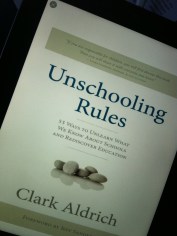
Several years ago my friend Tom gave me a book written by Clark Aldrich entitled Unschooling Rules: 55 Ways To Unlearn What We Know About Schools And Rediscover Education.

unschooling rules photoWhat continues to strike me most deeply is Aldrich’s position that there are three types of learning: learning to be, learning to do, and learning to learn. I believe that the mission of education is to help our students (and ourselves) learn how to do each if these: learn how to learn, learn how to do, and learn how to be.


I realized that one of the things that I have been finding most troubling about the direction of “school reform” has been the loss of commitment to the ‘learn how to be’ and ‘learn how to do’ pieces. The more I thought about it, the more I realized that this was just a part of a much larger puzzle. I wanted to try to make some sense of this puzzle and find I do that best by writing and hearing from others about their reactions.

My work as an instructional and executive coach has offered me the opportunity to visit a number of schools and districts throughout the country. Reflecting on this experience as well as my time as a school and district leader, I realized that (a) I resonate strongly with Aldrich’s three types of learning concept and (b) I’ve seen very few examples where all three types of learning have been the intentional focus of the schools and/or districts.

Since I’ve frequently shared my sense of Aldrich’s wisdom, I thought it might be interesting to reflect more deeply on his learning types.   So I’ve decided to complete a little exploration of Aldrich and my response to his thinking. Because it’s my blog and I get to pick, I’m going to begin with

The Need To Learn How To Be…

As an ‘older’ person, I guess it’s normal to spend time looking backwards… in all likelihood it’s because, in that direction, there’s so much more to see.   I think of the decisions I faced growing up in the 1950’s and early 60’s. There were few that had the long-term implications of missteps in today’s world.

Then I look at the kids I’m seeing in schools when I visit classrooms. How are they explaining to themselves things like the Orlando attack, the Sandy Hook school shooting, Ferguson, the embarrassingly uncivil behavior of presidential candidates? What are they internalizing about what it means to be an adolescent in the world? An adult? How do they reflect on the ability to begin, nurture and sustain relationships? How do they examine their own sexual identity?

fwbrfu4vduqvib4hrqifeg

Such explorations are both incredibly important and highly engaging for kids. And while we see the engagement levels of students drop precipitously as they move through the grades, we ignore the research on the importance of engagement and learning. We have focused our efforts on getting better at schooling, at mastering the strategies of efficiency, and have accepted test scores as a demonstration of our instructional prowess.

And how are we doing this? We are spending ever increasing amounts of time and resources to improve the performance on topics and content that represent little more than guesswork about what kids will need to know to be successful. We work harder and harder to improve the preparation we experienced while, at the same time, the world is getting further and further away from that time.

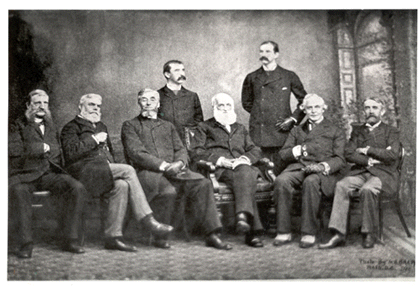
When our times cry out for helping our kids learn “how to be” in this “new” world, we focus our instruction and our measurement on what they should learn and how they should learn as determined by the Committee of Ten in the 1890’s! When our kids are beginning to form who they are going to be and how they wish to interact with the world and the others around them, we’ve diminished the time available for ‘socialization’ and have made kindergarten the “new first grade”. We have accepted such terms as kindergarten readiness and entrance requirement for pre-schools as the ‘new normal’.

And we watch. Good teachers and good school leaders find themselves working harder than ever before… and feeling less and less fulfilled by their work. It is time. It is time to take Clark Aldrich to heart and begin a serious exploration of how we can plan, design and offer engaging learning experiences that intentionally focus on the ways in which our kids can explore who and how they wish to be in the world and in their interactions with it.

I know firsthand that many of you on this mailing list have exciting examples of how you are helping kids learn how to be in the world. Take a few minutes and share your stories. The stories are the power.

Unknown's avatar

The Right Thing


success but for tests


Sometimes things just come together It’s time to recognize that there is a difference between doing things right and doing the right thing.


For a while now, I’ve been working on a paper dealing with the relationship between the 40+ years of work in New Jersey on the development and refinement of curriculum standards, the related investment/development of large-scale assessments and the persistently flat (with very few exceptions) NAEP scores over that same span years. The data seem very clear and the conclusions obvious. If we want to significantly increase student achievement for all kids, we haven’t found the correct formula.

I began this project as a result of my reflections on the time I spent serving in the NJ Department of Education and the place of that work in the ongoing continuing discussions about education reform.

During this same time, I found myself drawn to the story of Newark. Much like following thumbnails on You Tube, one book led to another… each adding another dimension to the story, none painting pictures of success. I realized there was a connection between what I was reading and the work on my paper; however, identifying that connection was proving maddeningly elusive.

Recently, however, in just one week along came Ms Laura Waters analysis of the Abbott decisions and, from another source, a link to an interview with Russell Ackoff, conducted before his death in 2009. As a regular reader of this site, I needed no introduction to Ms Waters. Ackoff, however, was a new name. A little research revealed that he had a long, varied and distinguished career, including a time from 1986 until his death as professor emeritus of the Wharton School at the University of Pennsylvania.

In Ackoff’s interview he noted that, while we frequently used the terms synonymously, there was a growing recognition that there is a difference between efficiency and effectiveness and that Peter Drucker had captured this by saying that there’s a difference between ‘doing things right’ and doing ‘the right thing’.

Ackoff expands by suggesting that doing things right is about efficiency but doing the right thing is about effectiveness. He makes a strong case for the connection between wisdom and doing/identifying the right things. He notes further that when we try to do things right about the wrong thing, we actually make things worse… such attempts at improvement actually take us further from both the recognition and accomplishment of the “right thing”.

There it was.

While at the Department of Education, I was proud to work with many good people who worked very hard to do testing right. Yet at no time did we consider the possibility that we were trying to do testing right without considering seriously whether or not it was the right thing. Ten years later, there is increasing (but nonetheless largely ignored) evidence that it was not the right thing. Accompanying this evidence, is the increasing voice of those pointing out the failure of this direction on both the ‘doing things right’ and the ‘right thing’ test.

Assume for sake of discussion that Ackoff was correct when he noted that we learn more from our mistakes than by doing things right. This places us in great shape. We’ve got more than a few mistakes from which to learn. One take-away seems to be that we can continue to try to do things right or we can invest significant human capital in the exploration and identification of the right thing.

What seems abundantly clear is this… continuing to invest more time, energy, resources in trying to improve ‘doing things right’ with Abbott, the 40 year cycle of revised standards and assessments, the state take-over of school districts and municipalities, etc., is going to get us more of what we’ve got. It’s time to consider that we have identified the wrong thing and our attempts to do things right are actually taking us further away from any lasting solutions and from the right thing.

Recommended reading for the “Newark story”

Inside Newark, Decline, Rebellion, and the Search for Transformation, Robert Curvin

Between the World and Me, Ta-Nehisi Coates

The Prize, Who Owns America’s Schools, Dale Russakoff

Unknown's avatar

Where’s the Bozone Layer?

Where’s the Bozone Layer When You Need It?


Bozone 2OK, so I tried just adding a comment to a recent posting by one of my favorite boggers, Jan Resseger.
In reporting and commenting on a decision by the Ohio State Board of Education, “Wisdom Prevails, for Once, as Board Members Set State Math Test Cut Scores”, Jan once again demonstrated the skills and insights that characterize her reporting. But I felt I had to do something to deal with the frustration raging in my belly. It didn’t work. So here goes.

Moving on…The post in question deals with an ongoing controversy in Ohio (not the only state, by the way) over the establishment of cut scores for the state’s new large-scale assessments.

For a quick and dirty refresher, the cut scores are the arbitrary scores set to establish the assignment of the various performance levels used for reporting of student learning. These scores are set by the state (usually by the boards of education) and frequently completed in collaboration with a committee of statistical experts.   Sometimes, these cut scores are recommended prior to the review of the actual test questions and the perceived degree of diffculty… Are we beginning to see the need for Bozone protection here?

While the discussion regarding the validity, accuracy and usefulness of these arbitrary scores has accompanied the wide-spread use of large-scale, state-wide assessments, only recently has the discussion openly included the reality that such scores might be, and apparently are, used to support politically motivated actions.

So here’s the Cliff Notes version of the debate covered by Jan in her post. The state of Ohio had terminated its contract with PARCC and hired the American Institute of Research (AIR) to develop and administer this year’s test. According to Patrick O’Donnell, the education reporter for the Plain Dealer:

“Preliminary test scores on Ohio’s new Geometry and Integrated Math II exams… show that the tests were such a mismatch with student ability that fewer than one out of every four students who took them met state benchmarks.  The state had predicted that 59 percent of high schoolers would score as ‘Proficient’ or above on the Geometry exam, but only 24 percent did.  Similarly, 56 percent were projected to score as ‘Proficient’ or above on the Integrated Math II exam and only 21 percent did.”

So what did the state do when faced with the prospect that significant numbers of students might have their graduation requirements compromised by the scores?

As Jan points out…

Too often the people setting the scores in the test-and-punish ethos that has dominated our society are anxious to “protect the quality of the diploma” and guarantee “college-and-career-ready.” There hasn’t been so much worry about the quality of the schooling experience itself.

So, of course, they argued about the need to “maintain high standards”, emphasized that such scores are good “to motivate students to work harder”, and argued for the need to avoid caving to the “trophies for all” mentality that has apparently sapped the moral character and industriousness from out youth. The Ohio Department of Education officials argued that the performance of students was not accurately reflected in the test results (apparently ignoring for a moment their role in establishing the cut scores used to determine passing rates) and that the cut scores should be raised. They asked the state board members to raise the scores so that 52 percent of students would be rated Proficient or above on the Geometry test and 35 percent Proficient or above on Integrated Math II… apparently there was rationale for the magic of 52% as opposed to, say, 49%. I would expect to see this discussion about the ‘magical’ 52% on the John Oliver Show some time real soon now. Perhaps making the case for an even thicker Bozone Layer.

Jan and I rarely disagree; however, in looking for a bright spot in all of this, she refers to the recommendation and the board’s acceptance of it as a display of common sense. I, on the other hand, see it as a continuation of the lunacy that had driven the development and implementation of the standards/assessment solution to education improvement. Talk about the difference between doing things right and doing the right thing.

Of course, trying to fix the obvious problems with the Ohio assessment and cut scores issues is an attempt at doing things right. It’s also a great example of how trying to do the wrong thing right just makes things “wronger”!

Let me conclude this little rant with a few questions … (1) If you were going to attempt to solve a critically important issue such as what should our kids be able to do as a result of spending 13+ years in school, who would you put in the room? Let me guess. It might not be state and/or national politicians and politically appointed members of the US Education Department… at least not without an significant increase in the Bozone layer to protect our kids, our educators, our families, and our future from the harmful effects of these ill-informed reformers. (2) How did we, as educators, allow the discussion of improving the learning experiences for our kids get so far afield? (3) Isn’t it past time to start thinking of ways that we can begin to act as if learning really matters?

As Ken Robinson points out, the ability of these “reform” folks to develop such creative names as No Child Left Behind, Race to the Top, and, now, Every Students Succeeds demonstrates with doubt that, while they may know little about teaching and learning, they certainly understand irony (and I think that may be an ELA standard). It time to activate the Bozone Layer!

Unknown's avatar

Cut the red wire…but first

 “Cut the red wire…. But first…”  …

For those off who might have missed it or have memories as faulty as mine, this quote comes a MASH episode in which BJ and Hawkeye are trying to defuse a bomb.  Hawkeyes is following the directions that BJ is reading to him from a manual.  Just as he , following BJ’s instructions, cuts the red wire, BJ calmly mentions… “but first…”  The evolution of the piece that follows reminded me of that exchange… it represents a “but first”.

This started as the second of a three part series exploring the three types of learning that Clark Aldrich describes in his book, Unschooling Rules: 55 Ways To Unlearn What We Know About Schools And Rediscover Education.

In the first post, I explored what Aldrich refers to as the need for us to focus on helping kids “learn how to be”. In this piece I wanted to explore his concept of learning how to learn.

But as I was outlining my thoughts, I realized that I was focusing more on some pre-questions that I had to explore before my mind would let me get to Aldrich’s thinking on the topic. More specifically, I kept getting interrupted by questions that moved beyond Aldrich, or maybe they actually come before Aldrich. The questions that wouldn’t stop pestering me and that I want explore here are: “Where are we right now? How the hell did we get here and, most importantly, what is keeping us here?”

So… now it’s going to be two  3-part series. This first series  will deal with the three questions… one at a time and then I’ll be returning to Aldrich to explore the learn how to learn and learn how to do learning types.

So, first of all, where is “here” … 

“Here” is just about where these   guys wanted us to be.

Committee of Ten.png

Committee of Ten,  courtesy Sudbury School

In 1892 they were asked to develop a model for what content should be taught and how both the content and the school day should be organized. Only problem is that it didn’t change after two world wars, after the Great Depression, after several recessions, after the industrial revolution, after the invention of the automobile, the computer, the internet, the cell phone, etc., etc., etc.

If you were designing what and the way kids should learn in 2016, would you ask these guys? Well, we sorta did! And here is where we are.

In many ways, for kids and teachers it’s surprisingly like the turn of the century… the 20th Century! So for me it’s kind of safe to say that…

  • “Here” is trying to do the wrong thing better – i.e., schooling designed by 10 guys in 1892.

While there is a growing sense that we can do schooling better if we can combine the 1892 curriculum with a reframed focus of soft skills and dispositions, in my mind this is still trying to do the wrong thing ‘righter’. Why? Because for right now “here” in far too many instances is a continuing focus on loading up the school day with the content knowledge that has been defined by business folks and politicians and that can be measured most easily and efficiently – i.e., large scale state assessments.

In a recent post Will  Richardson Richardson shared a quote from Russel Ackoff…

“There is no longer the slightest justification for introducing children to the idea that human thought is a collection of fragmented “disciplines” and making that idea the center-pin of the educational experience for students in their schools. As a historical curio, this idea might make for an amusing aside in a general discussion of the evolution of human thought, but as a notion that is productive and useful for developing minds it is, at the very least, counterproductive. Children grow up seeing the world as a whole. Their greatest challengeone that continues to be the central task of every person throughout lifeis to form a worldview that makes sense out of the multitude of their experiences. Indeed, human sanity depends on the integrated nature of a person’s worldview; fragmented psyches are generally considered ill-adapted to the needs of adult survival” (Kindle 950).

  • “Here” is continuing to ignore Ackoff’s observation and ignoring the wealth of materials available at our finger tips to help us design and provide engaging learning experiences and continuing to limit the location of learning by content domains, time and geography.

As Will Richardson shares in another recent post

(Is it beginning to look like maybe I should just suggest everyone read Will Richardson and stop writing myself?)

It’s not hard to see that our focus in schools isn’t on learning as much as it’s on making sure kids become learned about the “best-guess” curriculum we put in front of them. Similarly, it’s hard to argue that that approach is getting them ready for the 90%-10% world of self-determined learning that we all know they’re going to live in.

 Here’s truth: We now have access to more uniquely relevant and interesting resources for any given child to learn from and with than any organizationally selected curriculum could possibly offer.

Which is why the school curriculum should now be an act of creation instead of a highly scripted package of content for completion.

  • “Here” is maintaining the organization of content, school day structure, and time to the model recommended by the Committee of Ten over 100 years ago.
  • “Here” is a place where collaboration is revered as an idea and less frequently practiced. Want to check it out… as several teachers to explain the grading system used by the teachers whose rooms are located on either side of theirs or ask your own kids how many different grading systems they have each year. Too frequently, our school cultures foster and reinforce an “independent contractor” mentality.
  • “Here” is also a place where the expectations for teachers and kids…all kids… have changed dramatically.
  • Here is a time when too many students leave school unprepared to define, direct, and successfully meet their own learning needs; when too many students lack experience in collaborating with others from communities beyond their own to meet common goals; and, when too many students lack the confidence to know that they can be their own learning agent… able to plan their learning, organize resources and set learning targets.

Want to add a few more “here” statement?

Conclusion…Our system is not giving students what they need to function in the world they are experiencing and our schools and classrooms are too frequently organized to get exactly the results they are getting.

To me, this begs a few big questions…

  1.  What do we/should we mean by education?
  2. What do we want our kids to know, be able to do and be like when they leave school?
  3.  How have you answered these questions in your school?
  4. Would you share some of your answers with us?