
Unknown's avatar

“Why Are We So Angry?”

FullSizeRender-2

When I was a grad student many moons ago, I was enrolled in a summer session course.  I was nearing the end of my degree program and many of the course titles and experiences have blended together in my memory.  But this one stood out… not because of the content but because of one exchange that occurred between the professor and a younger (than I) student.  After the prof had shared what he considered to be the salient facts about our upcoming experience, this young man asked the equivalent of “what will we have to do to get an “A”?  The professor looked at him in silence for what seemed like an eternity and then replied, “Son, I’ve seen your future.  It doesn’t work.”

During the past few years that exchange has crept into my thinking with increasing frequency. I find myself echoing the thinking of my grad professor and am becoming increasingly convinced that our “current” is not working and our future doesn’t look all that great either.

“Wait!”…”What?” Stock market’s up. Unemployment’s down. The economy continues to grow. GDP and GNP figures are good. By traditional quantitative measures, we’re doing swell. But what if traditional quantitative measures are the wrong measures? What if qualitative measures are not so great.  What if the things that make Jeff Bezos, Mark Zuckerberg, Bill Gates, etc. unimaginably wealthy are not the things that are improving the quality of life for the majority of us?  Do the quantitative measures matter to those whose life expectancy is dropping to levels unheard of for rich countries? How about rising levels infant mortality, rising medical costs, rising levels of indebtedness, loss of job/retirement security, shrinking middle class, increasing concerns about access to quality educational opportunities, or over 40 consecutive years of involvement in foreign wars, etc.?

What if the story of the American Dream is no longer a reality/possibility for an increasing number of Americans?

I find myself wondering why we aren’t asking these questions.  Why haven’t I been asking them? My answer is not one I’m proud of. The short form is this… these things didn’t touch me or at least they haven’t yet.  I earned good money, have a nice home, have a boat, have a somewhat dependable public retirement pension with paid health benefits and have a family whose members are also doing well.  I donated to some charities, volunteered here and there and learned (perhaps without realizing it) not to look too closely at those around me.

In short I was “fat and happy”.

Then along came the election of 2016.  I have always tended to pick and choose my ideologies… sometimes I identify with libertarian ideas that challenge the need for big government, at other times I think of myself as a fiscal conservative – i.e., don’t spend what you don’t have — and, at still other times(and perhaps most strongly), I tend to identify as a social liberal.  I am most certainly a pacifist, having never struck another person and shying away from most conflicts. But in the aftermath of 2016, I found myself perplexed.  It seemed as if the values that I grew up with and have accepted as guideposts for living were being challenged.  At one point I described the feeling that we were fighting a battle (more use of warfare language…more about that later) for the soul of a nation. Not finding the words I needed to express this out loud I decided to explore my response. I began to read more things outside of my “vocational” area of education.  My reading was pretty undisciplined and eclectic. I read people from very varied walks of life and perspectives. I read Marianne Williamson,  Umair Haque, Jon Kabat-Zinn,  Charles Eisenstein,  Will Richardson, among others.

What did I learn? 

I learned first and foremost that I needed to act.  I need to avoid the “Don’t Just Do Something, Stand There” trap. I need to “do something”. (BTW…This is one of those actions.)  I learned that 2016 wasn’t the year of the attack on American values.  The “American values” that were part of the story with which I grew up were, at best, embellished as a part of the “story of America” and, at worst, were mythical.

I revised my beliefs and, hopefully, my approach to responding to this awareness. I’m not certain that you will accept and/or share these beliefs.  I’ll leave that to you.  At this point, I wonder what will happen if we all at least spend some time examining what we believe, what has informed such beliefs and how such beliefs inform/limit our actions. I’ll start with my beliefs… beliefs that come not so much from reading the work of others but by working backwards from actions to discern the rationale for those actions. I find reinforcement for this approach in schools I have visited across he country during the last 15 years or so of my work.  In these experiences,  I’ve learned that the beliefs that guide a school or a school district are not found on the mission statement that are posted on the wall by the entrance. No. The beliefs are found by observing the practices, policies, and actions that guide everyday behavior. I hope you’ll scrutinize my beliefs using that same approach… how we act reveals what we believe.

To help with that reflection, here’s an example of the frequent disconnect between statements and actual beliefs.  Not infrequently one can find some variation of the following as a mission statement in most schools.

We are dedicated to the development of independent, responsible citizens who can contribute positively and creatively to our society.

Observations:

  • In not one school did I find a survey of former graduates to assess their contributions to the society they entered.
  • In virtually every school the policies, practices and procedures screamed compliance, not independence.
  • In the vast majority of these schools if one wanted to find practice in creativity, one better head for the art classroom.  Creativity building experiences were in short supply in most other places.

My beliefs:

But first:  You’ll notice that these beliefs are not very positive. That’s the point.  It’s not that we don’t all share positive beliefs, positive traits.  We are humans that share a basic goodness, a historical trajectory towards self improvement , an innate desire to help those less fortunate, but our actions have become driven by those that I list below. 

We are in the process of writing a new story and that new story, right now, is being shaped by beliefs that we have been reluctant to confront and, often, by a sense of our powerlessness to write a more positive story. This has a predictably bad end. My goal here is not to define an action but to create a space in which you might be able to reflect and choose an action that best fits you. 

We are a violent nation.  While we abhor the instances of mass shootings, we have relied on violence as a solution to problems from our very first landing on the shores. We continued this with our response to Native American resistance, with our normalization of slavery, Jim Crow, the internment of Japanese/Americans, and with wars fought to increase our holdings and/or expand our country.  We continue embrace a language of violence in our conversations, in our policies and practices, etc.  We wage “war” on drugs, poverty, illiteracy, etc. We refer to money raised by candidates to win elections as “war chests”. We “battle” for slots on the party ticket.  We make films that lionize the “reluctant” killer (see the Taken series, the Bourne movies, etc.) who grimaces in regret as he snaps the neck of a bad guy. We glorify violence and then we wonder why our children respond to emotional anguish with school shootings.  We spend unimaginable amounts on the defense our nation and our interests around the world and laugh at the suggestion of a candidate who proposes the creation of a cabinet level Department of Peace.

We are an arrogant nation. We have believed our own press clippings about American “exceptionalism”.  We are so convinced of our own national superiority that we are unable to even look for answers to issues of health care, retirement security, immigration, etc. in countries that have already resolved or have begun to resolve such issues. Our arrogance also extends to a belief that we can inflict significant damage to our planet, firm in the belief that when it gets bad enough we will pull another rabbit out of the hat and all will be well.

We are impatient.  We have little patience for deep problem analysis, gravitating instead to a reliance and faith in quick decisive action.  Andrew Bacevitch, in his book, Limits of Power, focuses on our tendency to be seduced by a reliance on the promises of messianic leaders… leaders who announce/sell their ability and commitment to resolve issues which have remained stubbornly resistant to previous, similar approaches.

We are a country founded on principles of patriarchy. We continue a culture of male superiority.  Almost without exception, females who rise to levels of corporate or political leadership have had to “out male” their male counterparts.  Strong willed, decisive men are characterized as leaders.  Women with similar traits are labeled as difficult.

We are a nation founded on the principle of white supremacy.  This is an inherited perspective.  In his book, The Imperial Cruise, James Bradley describes Theodore Roosevelt’s daughter’s cruise to the orient and the continuation of the European “mandate” to bring civilization to countries of other races.  While this cruise took place 40 years after the conclusion of the civil war and the emancipation of the slaves in our country, it reveals a deep-seated belief in the superiority of the  white, European race.   There has been much written about this notion of white supremacy in recent months and I have little of consequence to add to the story.  I see our relationship with peoples of other ethnicities and colors to be closely related to the belief I’ve included a few paragraphs from now about the transactional value of human life.

But these might not be the most critical of our national beliefs.  Perhaps most important is the acknowledgement that we have accepted, even as the richest nation on earth, that we live in a world of scarcity.  Life in our country is a zero sum game. In the wealthiest country the world has ever known, we feel we must continue to acquire because of the belief that there’s not enough for all of us.  Those who acquire much are praised and cited as proof of the reality of the American Dream.  But in a time of scarcity what someone else gains, I can’t have – i.e., we can’t give money to poor people; if we do I’ll have less. We believe that if someone gains, I must lose.   There are winners and losers.  Winners worked hard, losers not so much.  Those who didn’t achieve as much or perhaps not even enough to enjoy the middle class version of the American Dream have only themselves to blame.  They didn’t work hard enough.

Closely related to the zero-sum belief is the belief that life has no inherent value beyond its contribution to the economy– i.e., the value of life is measured by what one contributes to the economy. This, in effect, makes all life transactional, a part of the deal. A direct result of this belief is the consequence that the majority of people in our country report feeling unvalued. We need to at least consider that, increasingly as individuals,  we have simply become resources for profit driven quantitative measures of progress. In my own chosen field of work, education, we have come to value education not because of the contribution it makes to living a good life or how it contributes to the betterment of our society, but to the extent that “good” education (again measured in quantitative terms – i.e., large-scale assessments) provides good workers for the economy.  It is no accident that business leaders and business organizations – i.e., Chambers of Commerce – have become key policy setters in past several decades.

As I get close to wrapping this up, I’m going to add one final belief for your consideration.  I want to give credit for this to Charles Eisenstein.  Charles spoke about this at the gathering I attended and has written about it in his essay, The Age of We Need Each Other.

We are living in an Age of Separation.  Let me share more about this.

Over the course of my lifetime I have seen us grow increasingly separate from one another

  • It’s not uncommon for us not to know even basic information about our own neighbors, let alone people of different races or ethnicity.
  • We have become increasingly polarized in our opinions – i.e., the chasm between the position that our national security/identity is threatened by the current large influx of refugees vs. the reconciliation of such positions with the words inscribed on the Statue of Liberty, “Give me your tired, your poor – your huddled masses yearning to breathe free”
  • We see increasing examples of our inability/unwillingness to engage in civil discourse with people with whom we disagree… better to circle the wagons of our own tribe.

I’ve seen us become increasingly separate from our institutions.

  • We no longer trust our schools.
  • We no longer trust our elected officials.
  • We even find it increasingly difficult to trust our clergy.

I have also see us become increasingly separate from our own planet.

  • We cannot agree on the threat of global warming or even the accuracy of the science.
  • We have eliminated a huge percentage of the insects on our planet… not acknowledging that if we kill something approaching half of the actual life on the planet, we may be placing our own survival at risk.
  • We continue to treat the planet as a source of unlimited natural resources – i.e., oil, precious metals, fresh water, forests, etc.

You might think this is a pretty dismal conclusion. But I’d suggest it’s not the conclusion. Rather it’s an observation. It’s not cast in stone, unless we opt to continue as observers in our own demise.

The conclusion is that we can forge a path that can be a positive response to these beliefs. It is the path that focuses on empathy rather than anger. It is the path that seeks connection rather than separation. It’s a path that moves the conversation beyond our agreement/disagreement with the actions of a single leader.  It a path that requires us to identify what matters and who we want to be. It’s a path that suggests that we answer questions such as…

  • I wonder why in the richest country on earth, we feel and act on a sense of scarcity?
  • I wonder what would happen if we were to seek answers to critical questions rather than respond with rigid ideologies?
  • Couldn’t we at least try make this a land of sufficiency for all?
  • What would happen if we acknowledged that solving problems is not aided by “win/lose” thinking?

The path to these questions requires an action… an action beyond seeing our future unfold on the nightly news or being shaped by the opinions of cable news pundits.  What that action is isn’t for me to define.  It’s for each of us… as an “each” and as an “us”.

Be well.

Unknown's avatar

The Age of Separation…Who are we as a country? What is our direction? Who can/should we become?

Question #1 – Can empathy be the answer to separation?

Ithinker-28741_1280n my introductory post to this series, I shared that I found myself increasingly preoccupied with questions about who we are, who we are becoming, who do we want to be.  In this post I’m going to begin that exploration.   Today, I’m going to draw heavily on two essays by Charles Eisenstein. Why Charles Eisenstein you might ask (right after “who the hell is he?”)?  His essays will give you a pretty good picture. You can read them  here and here.

After reading his work and more about him, I decided to take advantage of an opportunity to attend a 3-day “More Beautiful World Gathering”.  The program was built around Charles book, The more Beautiful World Our Hearts Know Is Possible and was an expanded version of previous, smaller retreats led by Charles.  It was one of Charles’ first attempts to take his thinking and his successful appearance on Oprah’s  Super Soul Sunday to a larger audience (about 200).

One of my primary reasons for going to see Charles was that I was anxious to hear more about what he calls the “Age of Separation”.  I resonated with his thinking. While I have blogging and on-line community “friends” throughout the country and even outside of the US, I know only two of my neighbors even after a year of our move to this home.

This post will focus on what I sense to be a response to our increasing separation.

A few years ago when I was still actively consulting, I began to rely on the metaphor of “the story” to help communicate that we are in a time of significant change… change which has largely invalidated a story that many of us grew up with.  That story reads somewhat as follows…

If you follow a certain path conscientiously you will succeed in life. That path involved going to school, working hard, getting good grades, going to college, graduating, getting a good job, and enjoying a secure future (including retirement).  If you’re my age you heard this story fairly regularly. 

In my consultant work for the past few years I shared that, although we are still sharing this story, for many young people today, the story is a lie or, perhaps more charitably, a fable.  You don’t have to be a Republican or Democrat, a liberal or a conservative, to accept that the “old story” is dead.  All you have to do to understand this on a very visceral level is know the parent of a child who has recently finished college, has accumulated massive debt, and can find no job in their chosen field.  All you have to be is a worker whose wages have been stagnant for several decades or a retiree whose pension no longer exists.  If the old story were still “alive” there would have been no need for the call to “Make America Great Again.

Whether or not we like it, we are now living in a time between stories.  And in that space we are growing increasingly isolated from one another… a growing sense of separation.  We see and hear obvious examples of the dead or dying old story.

While we grew up with a story that anyone could grow up to be a millionaire, and we read of stories about the Gates, Bezos, Musks, etc., we see increasing examples of people losing their homes to pay medical bills, we see decreasing longevity, high infant mortality rates, shrinking membership in the middle class and a growing concentration of wealth in the hands of a very few. It appears that we may be living the poorest wealthy country in history.

We appear to be in the process of writing a new story and this new story shapes up as an Age of Separation… a time when we have become increasingly separate from one another, separate from our institutions, and even separate from our planet.  I don’t think I have to dwell on that idea as I sense that, while we may not have used such a label, we have experienced a growing sense of such separation. While I have “friends” on Facebook, I don’t know my neighbors.

I imagine that, if we consider it for a bit, we each have stories about our own growing sense of separation, our own growing sense of distrust.  Can I trust big corporations like Facebook or Google with my personal data? What news outlet can I trust to provide me with accurate, factual information?   Do I sense that my elected officials (even those for whom I voted) are acting in my best interests?

What I like most about Eisenstein’s thinking and writing is that he is more than a chronicler of doom.  He offers options. The option he offers for separation is empathy.  Let me share a personal story…

Not long ago we needed some electrical work done on our “new” home.  The previous owner was great about leaving info about service providers and I contacted the person whose name the previous owner had written on the electrical panel.  The electrician arrived, did his work and then as we were settling up the bill, he approached me with a Hilary Clinton crying towel and the question, “Do you like Trump?” My first reaction was, “Oh, oh… back to the yellow pages.”

To avoid a clumsy ending to his visit, I shared that it was a bit early for me to judge his record but I was not comfortable with him as a person and his disdain for my values. Then I remembered Charles and his prescription… empathy… what is it like to be the other person.

So I invited the gentleman in for a cup of coffee and I asked him about his story.  While he certainly didn’t convince me to change my opinion of the president, he did help me understand why Trump seemed like a good choice to him.  We didn’t convert one another but I did manage to avoid a search in the yellow pages.  More importantly, I gained a respect for him and for the power of empathy.

I’ve realized that I am a notoriously slow learner.  I’m not proud of the fact that it’s taken so long for empathy to become a part of my working vocabulary.  My experience/epiphany hardly counts as a research study. Can you see empathy as an antidote for separation?  Can you recall (and share) some of your experiences with empathy (either on the giving or receiving end)?  My millions of followers would love to hear your experiences.

PS This isn’t about chest thumping.  You can share and still be humble.

Unknown's avatar

Rethinking Rethinking

Hello again. It’s been a while.

compassToday begins a new chapter.  I’ve been stuck in a loop.  Confronted on an almost daily basis with behaviors and news reporting that treat ratings and factual information with equal value, I’ve had a hard time focusing just on things related to education.  What time I found, I’ve been spending participating in an online change school community.  It’s been a great experience and most times it has been a welcomed pause from the noise in my head… noise that left me asking big question like who have we become and who do I want to be?  But sometimes the distraction of the education conversation isn’t enough. Thankfully. It shouldn’t be enough.  As with a growing number of folks, I found myself thinking that if we can’t decide what to call the places where we are housing detained, separated families, we’ve been asking the wrong questions.

When I found myself fantasizing about being the lone person who stood in front of the tanks in yesterday’s DC parade, I realized that I needed to do something.  I recalled the commencement address commencement address by Dr. James Ryan for the graduates at the Harvard Graduate School of Education in 2016. If you haven’t already checked him out from previous mentions in this blog, I urge you to do so. He suggested that while people might expect Harvard graduates to have answers, they would be far more successful if they learned to ask questions… he offered 6 critical questions.

I realized that we’re looking once again for a presidential “messiah” to provide us with solutions that we like… solutions that far too frequently have no sound problem analysis behind them. Solutions that offers fixes without ever exploring why we are where we are… why we are arguing over the names we should use for facilities housing separated children.

So for a while I’ll be trying to bring some questions to a larger audience.  To do this, I’ve decided to double post my efforts, both in this blog and on my Facebook page.   Here’s the first post…

My best friend in high school once suggested that my mom, who was known to be talkative, apparently had a goal to talk to everyone in the world…twice. And she might be on her second time around!  Some of my more charitable friends have suggested that my inability to shut up is genetic.  This is by way of introducing a new venture for me… A new use of my Facebook page and blog.

We are recognizing that things aren’t going well.  Some people voted for the current president for that very reason. Others don’t much care for him for the very same reason.   But what if the differences in opinion about Donald Trump and his administration are a distraction?  What if we’ve become seduced by the lure of the quick solution to the degree that we’ve lost our ability to even ask “why”?  What if the issues that seem to be dividing us cannot be resolved by the selection of the next presidential messiah?

This introduction is by way of warning and hopefully will serve as a heads up for what you are likely to encounter should you choose to follow me.  My intent is not to impose my thinking or perspective on anyone.  It’s for this reason that I’ve moved some of my writing here.  One of the things I that I heard frequently as a child was that it was not polite to discuss religion or politics at social gatherings.  As I’ve aged I’ve come to believe that what was intended as good advice has actually contributed to our apparent inability to discuss emotional topics in a thoughtful, kind and empathetic manner.

In this forum you are free to interact with my thinking, my questions, my reflections and those who may choose to offer their own questions, responses, and reflections, you are also free to “unfollow” me if my thinking is too unsettling or offensive. It is not my intent to be offensive and I would ask that anyone choosing to add to the conversation do so in a polite and respectful way.

There ‘s a sweet kind of irony that I’m writing this introductory post on the day after Independence Day.

If you have friends who might like to participate in the exploration of questions regarding the direction of our nation and our culture, please share.

Be well.

Unknown's avatar

Title: What’s Change Really Like… A Tale from Our Canadian Neighbors

As usual, I’ll begin this piece with a bit of context…

As many of you know I’ve been spending time working on my learning… mainly learning about learning.  As a part of this process I’ve become more of an active participant in the Modern Learners Community.  One fascinating aspect of this engagement has been the opportunity to participate in the Modern Learners’ Change School professional learning experience.

Change School is a virtual, cohort-based learning experience in which participants engage with the Modern Learners team and one another in an exploration of, and support for, the process of reimagining school in their districts.

One of the unanticipated benefits of the experience, and one I can’t stress strongly enough, has been the opportunity to meet, listen to, and learn from some wonderfully talented and committed educators from around the globe (participants In Cohort 7 are working throughout the US, Canada, Africa, Asia, Australia and New Zealand).  This cohort (the 7thand latest) was attended primarily by new participants but also by a number of participants from earlier cohorts who returned to deepen their earlier experience, complete explorations which had been left incomplete due to the pressures of their jobs, and continue their access to the team’s support of their change school efforts, etc.

The experience was as intense as it was enjoyable (and, yes, I’d recommend joining the Modern Learners Community and a Change School cohort if at all possible).  Through weekly online “cohort meetings” supplemented by weekly scheduled group or individual coaching sessions, and the participants’ responses to team offered “provocations”, I came to know a number exceptional educators and began what I can honestly term deep, engaging connections.

In today’s post and the one that will follow, I’d like to share with you pieces of an exchange which occurred between me and a Cohort 7 educator, Cam Jones. Cam was recently assigned to an administrative role in one of his district’s alternate high schools in Canada.  But why would I suggest that you visit a bit here with Cam?  Because Cam, more and better than anyone with whom I’ve spoken in recent months, has managed to capture in his “conversation” with both me and himself the logistical and internal challenges involved in changing school.

In the first of this two-parter I’ll share Cam’s response to a question I had shared with him about applying the 5 Key Questions referred to by Dr. James Ryan in his 2016 commencement address to the graduates of Harvard’s Graduate School of Education.

Note: In the introduction to his address, Ryan captured what I would consider to be the essence of good leadership and a seriously underutilized skill… the asking of good questions.  Ryan shared with the graduates that, as graduates of Harvard, people would expect them to have answers.  He suggested, however, that their success would depend less on giving answers and more on the quality of the questions they asked.  He offered 5 and a bonus question.

Here, once again, are Ryan’s Five Questions

  1. Wait …What?– (asking a clarifying question) – understand an issue before advocating for it – at root of all understanding
  2. I wonder (why/if)– at the heart of all curiosity
  3. Couldn’t we at least?—getting past disagreements – beginning of all progress
  4. How can I help?– relationship builder and alternative to “savior complex” – how we help matters as much as that we helped – at the base of all good relationships
  5. What truly matters?– gets you to the heart of life

Bonus question:  Did you get what you wanted out of life?

Cam’s writing speaks for itself.   With Cam’s permission, I’m sharing here pieces of what he wrote.  I trust you’ll find his words and his self-reflection as eloquent and moving as I have.

I begin with Cam’s response to Ryan’s questions in the context of his work at his and other alternate high schools in the district (there are six).

“How else I wonder can we do things?”

“I’ve wondered why we do things the way we do, often.  It comes down to this: in working with students marginalized by the system in a variety of ways, our program relies on a tool for learning that I don’t see the benefit of.  Further, the method of delivery is counterintuitive: we work with the most visibly disengaged students using the least engaging way of learning I can imagine–independent, read and write. So, why…why do we do that?  I think the answer falls to pressing concerns. Many, if not all, of our students are non-attenders before they arrive at our site… Our students are well behind on credits relative to their age because of disruptions to their education. They often return to our setting with deficits/gaps in their learning, executive function, and social/emotional well-being. The Alternate Program provides an alternative to the system: we exist to serve the student where they are now, first.

And this is the rub: I think the pressing concern for our programs is student well-being; it is our operational and aspirational focus. I think our “wonder why” is that we’ve never wondered why. Maybe we haven’t had to. Maybe we haven’t wanted to. And over time we’ve become comfortable with our rationale for our approach, or our not needing to provide a rationale.  Instead of talking about learning, we talk about the trauma our students arrive with, and manage daily, and glaze over the learning part of our responsibility with credit accumulation. If they’re earning, they’re learning. “

Couldn’t we at least…

“Couldn’t we at least…” come back to learning.  I think we are. I think the contemporary vision for the Alternate Program is coming back to learning.  In part out of necessity. Our student demographic doesn’t fit our narrative as it might have years ago.  In the past our structures were hard and fast, at least as the narrative recalls them. These structures are eroding and allowing different structures to surface.  Moreover, supports that were not part of the Alts are now front and centre. We’re coming back to learning.”

How can I help?

“How can I help?”  I’m learning how to help.  I’m asking questions. At times I’m letting my impatience, my frustration be known.  At other times, I’m letting my passion get ahead of me, and letting my disappointment with how we do things be visible.  In the meantime, I’ve found other ways, better ways in my mind, of doing things. I am modeling an approach where my expertise is learning, and the curriculum is a background to the collaborative work I do with students.  I’m turning my attention to awareness of my blind spots: students who engage in collaboration are thriving in my classroom; students that aren’t engaged: well, I’m working on that too.  It’s a little tougher.

In the meantime, I’m designing what I am calling alternate experiences beyond the walls of the school, with community partners, and using these examples as means to open the discussion about what learning can look like.  And I’m constantly checking myself against the idea of being a learner with the students, alongside the students, and fighting the instinct to “educate” in the ways I was “educated”.

What truly matters?

“Because, after all, “What truly matters?” in my work in the Alts (Alternate Schools) and elsewhere is that I’m striving towards a way of doing things that aligns with my beliefs, about learning, about life, about a vision for school, and how we support the students who have rejected the system and said “I’m not jumping through your hoops.”

“And did you get what you wanted out of life, even so?” 

“And did you get what you wanted out of life, even so?”  It’s funny: I ended up an English teacher, again, begrudgingly.  This was not the path I thought I’d take to the Alts. I just knew I wanted to get to the Alts.  The timing was imperfect, the context not ideal.  And yet in returning to the classroom I’ve had this amazing opportunity to be a better teacher.  I’m not sure ashamed is the right word, but I certainly wasn’t proud of my teaching experience, in hindsight.

This year I’ve moved closer to a version of myself as teacher that I’m proud of.  It’s a work in progress, but I’m energized by it.  And as someone who wants to challenge how we do things, and be part of the answer and change going forward, I can’t think of a better place to start from.”

Being the change on the ground, rather than seeing the change from on high are two very different perspectives. The ground game has more work and more risk; but when it works there’s nothing more beautiful to watch.”

When you think about changing what happens to/for kids in school, what do you wonder? How would you answer “What matters?” Does what happens in your school/district include intentional actions to support your response to the “what matters” question?

Unknown's avatar

When School Purpose Meets Algebra II Who Wins?

Screen Shot 2019-03-25 at 11.24.39 AM

by edshelf: Reviews & recommendations of tools for education

So the headline is misleading. I’m really not going to write about Algebra II.

I want to share thoughts about two seemingly unrelated ideas.  As I reflected on them I realized that they were much more closely connected than I had originally thought.  I hope that when you read this you will also see both the connection and the importance of that connection.

The two thoughts focus on the concept of school purpose and the value of voice… in this case, student voice.  My explorations stem from a conversation and two readings and I’ve included the links to the readings in the event that you’d like to explore them further.

Yesterday I had the opportunity to share a lunch with a dear friend.  Having lost touch for years as we each allowed family, distance and career responsibilities to create a separation, we schedule our lunches with a deliberateness intended to insure our connectedness.  Like many such occurrences, I didn’t recognize the hole our separation created until we “rediscovered” one another.

Our lunch conversations include family updates, shared experiences in very different professions and, almost always, philosophical discussions about the state of our world. Yesterday’s lunch was no exception.  We rated the various politicians who have announced their intentions to run for the presidency in 2020 and found ourselves discussing core values and how we learned ours.

Then this morning I read two pieces that confronted me with the reality that yesterday’s conversation about core values was hardly philosophical. Looking at the lunch conversation and these two readings through the lens of my career in education, I found myself confronted by a very loud voice asking…

“What the hell are we doing? How much longer can we continue to avoid deeply exploring and seriously answering the question, what is the purpose of education and, more specifically, what is the role of school in that purpose?”

Before you give up on me here for wasting your time with another philosophical bird walk, I’d like to highlight a few findings from a report that Jan Resseger explored more deeply in her post morning. I urge you to take a few minutes to read Jan’s post. In it she describes a study completed by researchers at UCLA, “School and Society in the Age of Trump”.

In the study, researchers surveyed 500 public high school principals about current social issues and problems that are increasing pressures for students, teachers, and school administrators. The identified issues (along with the percentages reporting significant impact) were:

  • Political division and hostility (89%);
  • Disputes over truth, facts, and the reliability of sources (83%);
  • Opioid misuse and addiction (62%);
  • The threat of immigration enforcement (68%);
  • The threats of gun violence on school campuses (92%).

Here’s a little more about these figures.  Eighty-nine percentof principals report that incivility and contentiousness in the broader political environment has considerably affected their school community and eighty-three percentof schools see these tensions intensified and accelerated by the flow of untrustworthy or disputed information and the increasing use of social media that is fueling and furthering division among students and between schools and the communities.

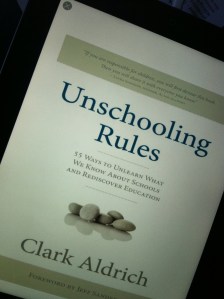
unschooling rules photoAs I‘ve shared previously, Clark Aldrich (Unschooling Rules: 55 Ways To Unlearn What We Know About Schools and Rediscover Education) suggests that there are three critical learnings for kids and, therefore, critical purposes for schools: help kids learn how to learn, help kids learn how to do, and help them learn how to be.  Bo Burnham in his highly acclaimed film, Eighth Grade, addresses how hard it is in normal times for a kid to figure out how to be.  His character describes her search for “how/who to be” when she’s in the car with her dad, when she sits at lunch with her friends, when she is at a pool party, etc.
Helping kids learn how to be/who to be is hard and I’ll offer that we haven’t been doing a very good job of it since the onset of the “school reform movement”.  We’ve heard a lot of “I wish I had time for that, but…” So what happens when we are confronted with the possibility that 89% of our schools are negatively affected by the incivility and contentiousness seen daily on TV! Is this how they’re learning how to be?

At a time in our history which has been described as an “age of separation” can we continue to rationalize the rigidity of the master schedule and the need for constantly improving test scores as excuses for not “finding time” to deal with the need for kids to learn civility and empathy, for not finding time to be intentional about helping our kids learn how to be in this environment?  Hang on to that for a bit, OK.

The second piece that I encountered this morning appeared in Medium and was written by Michael Klein, a special education preschool teacher at Kilawea Elementary School on Kaua’i.  The piece is entitled “Student Voice: Don’t Just Listen to Students; Give Them Power.”  In it, Klein described several initiatives in Hawaiian

Schools aimed at both increasing student voice and, additionally, student power.  He makes a powerful case for the importance of fostering student voice/power. He asks a series of questions.  Here are a few…

Would we consider students being on our school and district’s teacher hiring committees?

Would we allow students to evaluate teachers, principals, and even our superintendents?

Would we consider having students at principal meetings to make decisions alongside principals?

Would we consider having them being part of the process of designing new schools?

Would we consider students being present when making decisions about curriculum or texts for our school?

So, would I be wrong if I assumed that the default response to many of these questions is “no”?  Certainly, it would be “no” in the majority of schools I worked in and visited.  And why was it “no”? In almost all cases it would involve some of form of  “They’re not ready to do those kinds of things. They’re not adults. They’re just kids.”

But wait.

Didn’t we just say that these “kids” are being affected by incivility and contentiousness? By the disputes over truth, facts, and the reliability of sources? By opioid misuse and addiction? By the threat of immigration enforcement? By the threats of gun violence on school campuses?

And now the connection…

And so I come back to the question of core values and how we share them.

What if we can’t afford to have student voice and power remain “no” in a society which almost always has phrases like “good, productive citizens” in its school mission statements and then regularly enacts policies focused on compliance? What if it’s not just that we should give students voice and power but we have to for our own survival?

Helping kids learn how to be/who to be is hard. Giving kids the opportunity to explore who they wish to be … isn’t that a core value worth our commitment? And we can do it in places where they are surrounded by more caring adults than almost any other place in their lives.

Giving kids the opportunity to participate in and learn from conversations with adults about “adult” issues – i.e., giving kids a voice and the power to impact school decisions about such issues – isn’t that a first step in helping them learn how to use their voices thoughtfully and responsibly?

What would school look like if we made Aldrich’s “3 Learnings” the core purpose of an education?  What would school and learning look like if we designed learning experiences and created space for learning that focus not on the “mastery” of discrete content of a specific course (yup, here’s where I sneak in the reference to Algebra II) but on learning how to learn whatever I need/want to learn?

Is this a conversation that’s taking place in your schools or the schools your kids attend?  If yes, could you take a moment or two and share how?  If not, why not? Could you start it?

Unknown's avatar

Where’s Sancho Panza When We Need Him?…maybe he’s us.

screen-shot-2017-02-19-at-2-23-02-pmI was reading an article in The Atlantic this morning in which the author described the failure of the Republican party to reject the President’s strategy of using a national emergency as the means to circumvent the Congressional refusal to support his long standing promise of a border wall. The author described this as a “moment of extreme national cowardice.”
I was unsettled by my reaction. Is it possible that in my own field of interest/passion our failure to respond to signs of a system of education that is not adjusting to the changing needs of its students or to the increasing levels of emotional distress experienced by them is, in fact also a moment of national cowardice… cowardice not by our national legislators but cowardice by us, as educators?


I don’t mean the kind of self-serving cowardice that we have been witnessing by federal lawmakers. I mean a kind of cowardice which is less public and less intentional. I mean a kind of cowardice which is driven by fear of change, fear of losing what we have, fear of the consequences of acknowledging that we have spent far too long trying to do the wrong thing better, fear that in preserving our comfort with what is, we have avoided doing what should be, fear of acknowledging that the ways in which we have organized our schools and our focus on schooling have stifled, not encouraged learning.

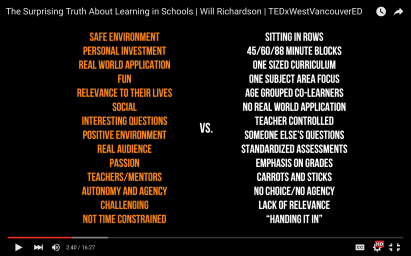
screen-shot-2016-04-09-at-4-07-32-pmMost of us who taught or who teach now have had a minimum of 16 years as students to learn how school works.  While we may/may not have learned everything that was taught, we most certainly learned “schooling”. We learned that “stuff” was organized into discrete content areas, that each of these content areas was taught in fixed blocks of time, that we learned mostly in age-based cohorts, that teachers taught, that tests measured learning, etc. Perhaps most insidiously we learned that compliance was/is more highly valued than questioning.

And so I’m suggesting that we find ourselves confronted with a challenge of courage.  When we recognize that the system we have been a part of, the system that we have largely internalized is not meeting the needs of the very people it was charged with serving, what do we do?  Many of us seek others who have reached similar conclusions.  We seek communities of support.  Far too frequently we have to leave our schools/districts to find such kindred spirits.   We find safe harbors for our thoughts and feel secure in the knowledge that we are not nuts.

But what if being in a safe place is not enough?  What if the impact of our commitment to “schooling” is far more damaging than the parents and community members realize or understand?  Let me offer a possible analogy to this situation. Assuming we have a significant problem with boarder security, it’s safe to say that a comprehensive response to that issue has eluded us.  Not surprisingly, it’s a complex issue.  And so we develop a response which is more understandable… a wall.  Continuing… Let’s assume that we have a problem with what kids are learning/not learning in our schools.  It, too, is a complex situation.  We develop solutions… better standards and large scale assessments. They prove to be our “wall”.

Recently, a member of a virtual community of educators to which I belong, suggested that she would find it hard to believe that I would be anything but gracious in my responses to other members of the community.  I’ll dispel that “myth” with my next few sentences.  We are living at the tail end of a story that is dying. The “story” that told us that if we went to school, did well there, got good grades, went to college and graduated, we would have a good job and a secure future for our families and for our retirement… That story is dead!  Ask any parent of a recent graduate who is drowning in huge debt and depending on the “gig” economy for a job. “Schooling” isn’t working for far too many kids.  We are presiding over and working in a system that is no longer working.

Not all of us are community organizers or political activists.  Not all of us see the world in the same way or, perhaps, with the same sense of urgency.  But what if those of us who do don’t challenge it? If we really believe that a significant part of our calling is to help kids learn who they are and how they can be in the world, is there a place for “moments of cowardice”? What would happen if we added our voices to those of striking teachers… our voices about the need not only to raise teacher recognition and compensation, but also the need to revisit the purpose of education? What would happen if we added our voices to encourage an inclusion of such a discussion in the development of the Green New Deal?

What if watching the dismantling of a system of public education in the name of choice and free enterprise, if watching the largest publishing companies profit from student data and the continued sale of both the large-scale assessments and the test prep materials designed around them, if failing to examine how the policies and practices in our own or local schools is contributing to the dramatic rise in student mental health issues is actually an act of national cowardice?

Just asking.

Unknown's avatar

When Good People Get Trapped by Self-Righteousness

Even while intending to cultivate equanimity and spaciousness, I notice how easy it is to fall into self-righteousness and indignation as soon as I start thinking about the things I don’t like in the world, especially when they seem to stem from decisions made by human beings. I catch myself “personalizing” something that is actually much bigger than individual villains, even though specific persons are playing various, sometimes awful, roles in what is happening at any one moment.

“Reminding Myself That Self-Righteousness Is Not Helpful” – Jon Kabat-Zinn
Medium, February 5, 2019

I’ve had enough conversations with friends in recent weeks to make me believe that I’m not alone in my struggles to accommodate the impact of events we are witnessing in our world.  So in place of my usual exploration of things educational, I wanted to make this available for you,

I saw Jon’s essay earlier this week and realized I was reading about myself.  If the introductory paragraph above has captured your attention, here’s the link.   I can add nothing to Kabat-Zinn’s eloquence.

Be well

Unknown's avatar

Time of Fear – A real time drama

thinker-28741_1280Coming soon … Creating space in a time of fear… in the face of powerlessness.
I should never indicate the topic that I’ll address in the next post.  It’s almost a guarantee that something will happen that catches my attention and “demands” that I share my thoughts, reaction, emotional connection.

This time, the world intruded via an event that has captured national attention… the confrontation of native America veteran and a high school student from Kentucky which took place during the past week in Washington at the Lincoln Memorial. What an incredible lesson about life in the time of social media.   After seeing videos of what was labeled as a confrontation, after reading the written statement/response by the student involved, after seeing an interview with the Native American elder, after reading a recent account on CNN (updated at 4:46 am!) which added information about another group involved in the event (the Hebrew Israelites), after being offered links to various YouTube clips and viral videos, and after having had the opportunity to participate in an incredibly thoughtful and sensitive exchange among members of the Modern Learners Community, I haven’t a clue what really happened.

I’m not sure that matters. While what actually happened may be of critical importance to those directly involved… the student, his classmates, their parents, the elder, participants of the Indigenous Peoples’ rally, the African American Members of the Hebrew Israelites, the teacher chaperones, the school leaders, etc. … to me this is now a historical event and I find myself trying to focus on the how and why of the event, on what we could be doing as educators to help our young people respond with greater understanding, with greater empathy and without resorting the violence as a solution, whether that violence be physical or verbal.

How and why do such events occur? I return to what has become a recurrent theme in my thinking. It’s an observation that I haven’t heard shared on major news outlets.  It’s an observation about our sense of separation… our separation from one another, our separation from our institutions (and the consequent lack of faith in their effectiveness). It’s an observation about what happens when people feel exploited and forgotten.  In some ways, it touches directly on the theme that I had promised to explore.  It’s an observation about fear and powerlessness and the behaviors which seem to accompany these conditions.

It’s the behaviors that accompany fear and powerlessness that I want to explore.

Let’s move this back to school and our continued resistance to calls for change.  Will Richardson (what’s a blog post from me without at least one reference to Will?) noted recently in his writing that teachers and educational leaders often express a sense of powerlessness in response to his inquiries about why there remains such a gap between educator beliefs about learning and the practices we see in our schools.

When I was traveling and visiting schools throughout the country I heard the same responses. In interviews with teachers I learned more. Many of those interviewed looked outside of the school for explanations and, frequently to assign blame… blaming the state, the district office, kids these days, social media, etc. They often named those they perceived to be “the enemy”…  state bureaucrats, the principal, the superintendent, the board of education, etc.  But beyond these behaviors were others, less obvious… feelings of exploitation, under appreciation, fear.

And so the origins and lessons of the DC event are not so dissimilar to those we are experiencing in our schools.  When people feel separated, frustrated, isolated, exploited, under appreciated they lose hope in traditional institutions.  These are not conditions in which innovation, creativity, and commitment thrive.

How often have you heard conversations in which the sense of separation and the accompanying sense of powerless are used to justify a refusal to see what’s in front of us or to remember that it’s our responsibility as educators to find and create the space so those around us can feel the sense of safety that comes from connectedness rather than separation? How often have we blamed the state’s bureaucrats for mandated testing issues while continuing to use grading practices that stifle student initiative, learning or creativity?  How often have we blamed declining engagement levels on our students or ignored the messages students are sending by woeful attendance patterns? How often have we created cultures in which separation and isolation are more pervasive than collaboration or the development or nurturing of caring, supportive relationships.  What have we done intentionally to create spaces where thoughtful reflection and empathy are the rule?

What would happen if…?

  • What would happen if we identified one issue in our schools that might reduce the sense of separation/isolation among teachers, among students?
  • What would happen if we engaged our school community in the development of a response to address the separation/isolation issue we identify?
  • What would happen if we wrote a personal piece to our staff and school community about our beliefs about learning? About how kids learn best?
  • What would happen if we devoted a sacred amount of time each day to improving our relationships with our staff?

Couldn’t we at least try one of these? 

Wrapping it up…

The Modern Learners Community has been engaged in a deep, thoughtful and sometimes emotional exchange of responses to the following prompt, “I’m curious about how you, the people in our Modern Learners Community, react and respond to the recent Convington Catholic event or others like it?  I’m also curious to know what you might need to build your capacity as it relates to leading your communities through these discussions.”

— Melissa Emler, Team Member – Modern Learners Community

I’d like to end this piece with a response from one of the participants in the Modern Learners Community

…It also made me think about this course, and clarify more what I value the most…and what I believe the world needs desperately right now…and they are all qualities of the heart: people who can compassionately listen, non-violently communicate, play, create, feel empathy, develop emotional intelligence, reflect deeply, love themselves and each other.

Susannah Azzaro, Modern Learners Community

Thank you. Be well.

Unknown's avatar

A Time to Choose

Ace Ladder Aug 14 - 2

FarSide Gallery – Gary Larson

Note:  I want to thank Will Richardson for inspiring this essay. He introduced a recent blog post, “2019 – A Time to Choose” with a challenging question:

“What are you going to do to change the experience your students have in school to reflect more compellingly what you believe is the right thing to be doing for kids and learning?”

Will’s piece is, indeed, challenging and, as usual, is a great read.  But I believe that, at this time in our history, we are called to ask Will’s question on a deeper, broader level – i.e., what are we doing to reflect compellingly what we believe is the right thing? 

Since the beginning of this blog a couple of years ago I’ve written a lot about leadership.  I began believing pretty firmly and comfortably that leadership could be defined as the capacity to build followership. As a result of several soul-grabbing experiences during the past six months I’m going to expand on that notion

If you’ve been following my reflections you know that I believe strongly in what Simon Senek  calls ”Circles of Safety”– places where people feel safe to express thoughts, challenge long-held truths, and take the risks involved in change. Senek suggests that these circles of safety are built on deep and caring relationships. They’re built on trust.

Putting my faith in the possibility that your continued connection to my reflection is based on that notion of trust, I’m going to test it. I’m going to test it on several levels.

I use Medium as a curating site to find writing that interests and engages me. Each piece published in Medium contains a brief description as well as an approximate reading time. So borrowing from both of Mediums approaches, here’s a brief description, “How the age of separation has threatened (and continues to threaten) the future of our kids and our country.”  And now the real test of trust… this essay and related tasks are going to consume at least 30 minutes of your time (and probably at least one or two adult beverages).

First, as context, I’m going to ask you to view a video clip prior to considering continuing with this essay (think blended learning).  I’m going to continue with a departure from my narrow focus on education. I’m going to share some observations that have found a voice as a result of the learning experiences I mentioned above. They’re impacting me deeply. They extend well beyond the field of education but on some levels they cannot be separated from it. I’ll leave it to you to decide the value of my observations and the connections you might see. I encourage you to share your reaction.

The clip is one I’ve referenced previously. It is the commencement address by the Dean of the Harvard Graduate School of Education given by Dr. James Ryan in 2016.  In it, he suggests 5 powerful questions that graduates should incorporate into their lives. Even if you’ve viewed it previously, I urge you to invest another 21 minutes to see what stays with you this time.

Welcome back… I hope.

In his writing, Charles Eisenstein describes what he calls the “Age of Separation”.  He describes it as a time in which we are increasingly separate from one another, a time in which we have become increasingly separate from our institutions, a time when we have become increasingly separate from our own planet.  Can you identify examples of each of these?

In addition to his description of our time, Eisenstein also describes us as living in a time of “interbeing”… a time when we are “being” between stories… a time when the stories with which many of us grew up are no longer valid… a time when the promise of the American Dream seems false and out of reach for an increasing number of people.  Umair Haque describes our time as one of increasing exploitation. In his detailed descriptions of a rich country in which increasing numbers of people are only one pay check away from serious financial trouble (government shut down stories, anyone?), in which people have to go online to beg for money to deal with health issues for which they are uninsured (or insufficiently insured), in which the producers of goods/workers have wages which have been stagnant for decades while wealth continues to grow at staggering levels for the richest among us, Haque substitutes the word “exploitation for Eisenstein’s “separation”.

I make the following connections.  It is not hard to extend the notion of separation to schools and schooling.  A friend once described schools as 30 classrooms connected by a common parking lot.  In my visits to schools throughput the country over the past 15 years, I have seen school after school in which separation dominates… kids separate from teachers, teachers separation from leadership, kids separate from one another. In many of these schools, teachers in adjacent classroom have no idea what is happening next door. Teachers work in isolation with little or no understanding, commitment, acceptance (pick your noun) of a common direction, vision, purpose (with the possible common commitment to have their kids achieve arbitrarily determined cut-scores on state assessments).

Haque, using a different measure (exploitation), has no trouble finding examples.  He suggests that, as a country we have progressed from the wealthy exploiting human resources (during the era of slavery and pre-union factory work) to the exploitation of natural resources (industrial pollution, strip mining, unregulated fisheries) to the final phase, the exploitation of one another.  Using education as an example, I don’t have to look too hard to see examples of student exploitation (sale of personal data, treatment of students and schools as “profit centers”, growth of charter management companies, so-called “portfolio” policies that see “free market” alternatives to public schools as valid approaches to “improvement”).

In accepting and, often, encouraging separation (Google “rugged individualism”) we have minimized the value of commonly held beliefs (my beliefs are just as good as your beliefs regardless of their basis in reality). We have, in an age of separation and exploitation, determined human value by the level of acquisition and, conversely, have limited the value of others based on the same criteria.

Perhaps words like separation or exploitation seem too harsh.  I want to raise the issue that regardless of which words we choose, there is a high likelihood that we, as a country with all of our institutions, have drifted off course – have lost sight of true north.  How far off course we have drifted may require more exploration; however, off course remains off course.  Are we separate from one another?  Does that separation seem to be accelerating?  Do we see examples of exploitation, not only of adults but also of children? If so, what do we do?

And so the reason for the Ryan clip.  What do we do?  We act as leaders.  We ask questions? Here’s a quick review of Dr. Ryan’s 5 questions:

  • Wait …What?– (asking a clarifying question) – understand an issue before advocating for it – at root of all understanding
  • I wonder (why/if)– at the heart of all curiosity
  • Couldn’t we at least?—getting past disagreements – beginning of all progress
  • How can I help?– relationship builder and alternative to “savior complex” – how we help matters as much as that we helped – at the base of all good relationships
  • What truly matters?– gets you to the heart of life

I mentioned at the beginning of this essay that I had modified my definition of leadership.  Part of the reason for that modification was the attempt to answer the questions that I’m raising here.  My revised thinking doesn’t alter the notion of developing followership.  What it does do is add another piece.  It is this… leaders create space where change can occur.  They build,  and build on, trust.  They build on the circles of safety they created.  They create spaces where separation doesn’t thrive.

If the direction of this essay strikes a responsive chord, how can you create spaces where separation and the effects of isolation are discussed and actions to eliminate them are valued and intentional?  As a start why not discuss this essay with one colleague? Maybe several. Why not take each of Ryan’s questions and develop a personal response?

Coming soon … Creating space in a time of fear… in the face of powerlessness.

Unknown's avatar

The Things They Carried

Things They Carried Screen Shot 2018-11-11 at 9.29.37 AM

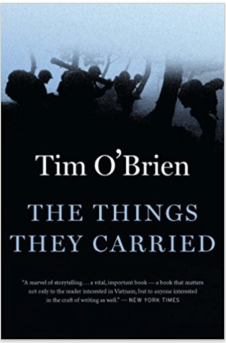
I was talking to a friend recently about the process of change in schools and all of the factors that seem lined up to protect the status quo.  In reflecting on the conversation, I was reminded of one of my favorite books from long ago, Tim O’Brien’s The Things They Carried. In his book, O’Brien sought to make a point about the terrible costs of war. Using the Vietnamese War as his backdrop, he tells the story about the things that he and his fellow soldiers carried with them. These were not just physical things. Those were small things, easy to carry. Not so easy to carry were the emotional things, things that weren’t so easy to discard.

I begin each piece I write with a hope.  In this case, my hope is that the story I’ll share will open us to the possibility that it’s not the physical things like favored room assignments, favorite lesson plans, predictable schedules that make change in schools so hard. Sure adapting to these is not easy. But often it’s the emotional burdens that challenge us more.  I started to think about the sources of such emotional baggage. Some were obvious but I also recalled something that was equally important, precisely because it represented any number of things that affect our willingness to take risks and accept challenges. It was something that I recalled from my time as superintendent. Since I’ve been preoccupied recently with the concept of stories, I’m going to share one with you to illustrate my observation.

This will be a two chapter story.  Don’t leave yet. They’ll be short chapters, filled with drama, suspense and a happy ending. OK, enough suspense, it’s about contract negotiations. Still here?

Why in God’s name would I share a story about contract negotiations?  Because while almost all contract negotiations end in an agreement, they invariably leave us with emotional scars… things that Tim O’Brien calls emotional burdens.  Things we carry with us and that affect our openness to change.  Here we go…

Setting the Stage – Chapter 1

In case it’s been a while since you’ve been involved in the process, here’s a quick synopsis of how most negotiations proceedings work. There are two sides. Each prepares a list of “gets” or “won’t give’s” and the fun starts.  Most states that have legislation permitting collective bargaining stipulate that areas for negotiations are limited to “terms and conditions of employment”. These typically focus on work hours, compensation (in the form of salary and health benefits), and responsibilities. These topics are not surprising as most model contracts for “labor” came directly from the experiences of organized labor unions.  Remaining true to the tradition, boards of education are described as management, setting the stage for repeating the adversarial process which had characterized the relationships in the labor movement.

Enter stage left… the writing and thinking of Dan Pink who has achieved international acclaim for his work on motivation. In case you’ve missed it, here’s a link to the animated version  of Pink’s viral TED Talk.

Pink’s extensive research revealed that there are very different motivational factors at work depending on the type of work you do.  If you’re engaged in assembly line /production work, monetary incentives can improve performance. But in “thinking” kind of work, financial incentives actually reduce both performance and engagement.  Here’s what Pink’s research revealed. What matters most to workers in “thinking” jobs? Three things: clarity of purpose, autonomy (freedom to focus on what works), and the chance to get better at what you do.

While many of the architects of the “school reform” movement might think of teaching as production/assembly line work (explaining their love affair with performance incentives and punishments), most of can make a pretty convincing case for teaching as “thinking work”. So let’s circle back to the contract negotiations process and its impact on embracing change.

Here’s where the story gets personal – Chapter 2

From my very first teaching job, I’ve been involved in contract negotiations.  I have served as an organizer of the first “association” at a private high school for boys, the president and chief negotiator for the teachers’ (and later supervisors’) association and the chief negotiator for the board of education while I was a superintendent. What I’m going to describe comes both from what I experienced and what I’ve observed.

For the record, the process used and promoted by both the state teachers’ organizations and the organization representing boards of education is referred to as “positional” bargaining.  As I described briefly earlier, each side identifies positions of importance and proceeds to attempt to persuade the opposing side of the wisdom and fairness of their position, while simultaneously offering reasons why the positions of the “opponent” are unreasonable, unfair, unwise, etc.

Not infrequently the words used to “win” arguments are strong, often insulting, and grow in intensity as they are reported to those not directly involved in the process. In my own case and prior to my arrival as superintendent, negotiations in the district had resulted in protracted, contentious discussions, teacher pickets and demonstrations, as well as vilification of each side within the community.

This was not the time for a new superintendent to ask people to “go the extra mile” in support of program changes.  A culture that I had witnessed any number of times while negotiating as a teacher now had new meaning for me.  All parties in the process were “carrying things in their pocket”.  Kid performance stagnated, budgets failed.  It was not the time to suggest change.

Neither side liked the picture painted of them by the community.  It had become clear that using the same approach guaranteed a future that “didn’t work”. Some research revealed that there was an alternative to the positional bargaining that had resulted in this culture of separation and alienation.  It was a new concept in collective bargaining known at the time as win/win bargaining, more commonly referred to now as “interest-based” or “integrated” bargaining.   It was a process which relied on the identification of common interests and the ways in which these could be advanced via collaboration rather than argumentation. It worked. (At the end of this piece I’ll list some of the areas that were included in the contract for the first time in the district and, in one instance for the first time in the state.)  It worked because the process was designed from the outset not to focus on winning but on the identification of interests and the transparent efforts to acknowledge and find commonality within them.  This was accomplished by organizing the meetings as collaborative working sessions, by acknowledging the identified interests, by focusing on the commonality found in these interests, by working in teams comprised of folks from each “side” to find solutions which honored these interests, and by having the teams present their “solution” to the entire group for approval or revision.

The big idea…

This process and this story extend far beyond the impact of the periodic need to negotiate. They extend to the recognition and elimination of the policies, practices, and procedures which cause separation, alienation, and emotional burdens both for our colleagues and for our students – i.e., they extend to the creation of processes that aim for, and result in, connectedness rather than separation.  This process and others like it provide a direction for how honest efforts to recognize, identify and respond to the emotional burdens we inadvertently create can reverse the fear of change and increase the engagement in the change process.   In the event that anyone involved in this process is reading this blog, thank you for the courage that allowed us to acknowledge the collective hurt we carried with us and for the trust that enabled us to move beyond it.

 Addendum – Agreement high pointsWhile the items listed here reflect the context at the time this process occurred, the process and impact on culture remain timeless.

Summary of Interests:  interests identified and defined in the initial phase of the process – completed in large group setting with facilitator assistance.

Board of Education Interests

  • Change from the image of being the “bad guys”
  • Commit to and be recognized for attempts to be good stewards of the community’s tax dollars
  • Improve student academic performance
  • Improve the quality of teaching/instruction
  • Deal more effectively with poor performing teachers

Teachers’ Association Interests

  • Be recognized for their efforts
  • Receive and maintain compensation that is commensurate with similarly structured districts
  • Improve student academic performance
  • Create a more positive public perception of the district
  • Move away from the district’s history of implementing short term “fixes” to problems associated with poor student performance

 Contractual Agreements – Highlights of the main points included in the multi-year agreement forged via the Interest-based process.

 Revised teacher evaluation and support system

Teacher support systems based on need – i.e., more extensive support for new teachers (years 1-3 and beyond if warranted) including more frequent observations, peer observations; targeted support and support plans for teachers identified as in need of support with this designation resulting from self-identification, administrative identification, parental identification; less frequent observations for teachers recognized as “expert” (with mutually developed definition) as a means of gaining time to provide additional support for new teachers.  Teachers identified as needing support were to be assigned a support team consisting of building administrator, an “expert” teacher of the teacher’s choosing, an association representative, and expert teacher of the superintendent’s choosing (optional)…included was the development of a support plan and responses based on progress toward meeting the goals of the plan.  During the life of this agreement teachers assigned to this support response achieved the plan goals with one exception… based on mutual agreement that teacher left the district.

Teacher run professional development academy

Startup fund provided to begin the academy. Teachers selected by peers subject to superintendent’s input (but not approval). Course offered for credit would be eligible for movement on salary guide but not transferrable to other districts. Instructors selected from teaching staff and/or outside resources. Instructor to receive credits on salary guide in lieu of payment.  Outside instructors paid through tuition charges.

Performance based compensation plan beyond the base salary agreement

Performance target area determined jointly by board of education, administrative team and teacher workgroup.  Plan included the development of performance goals, professional support required, and use of locally developed performance assessments.  Award of performance bonus based in grade level growth from initial baseline assessment (Sept) to third administration (May). Initial target areas was math and included targeted professional development designed to improve math instruction and student performance.